Biebmolassi - Reconciling Sámi Food Systems
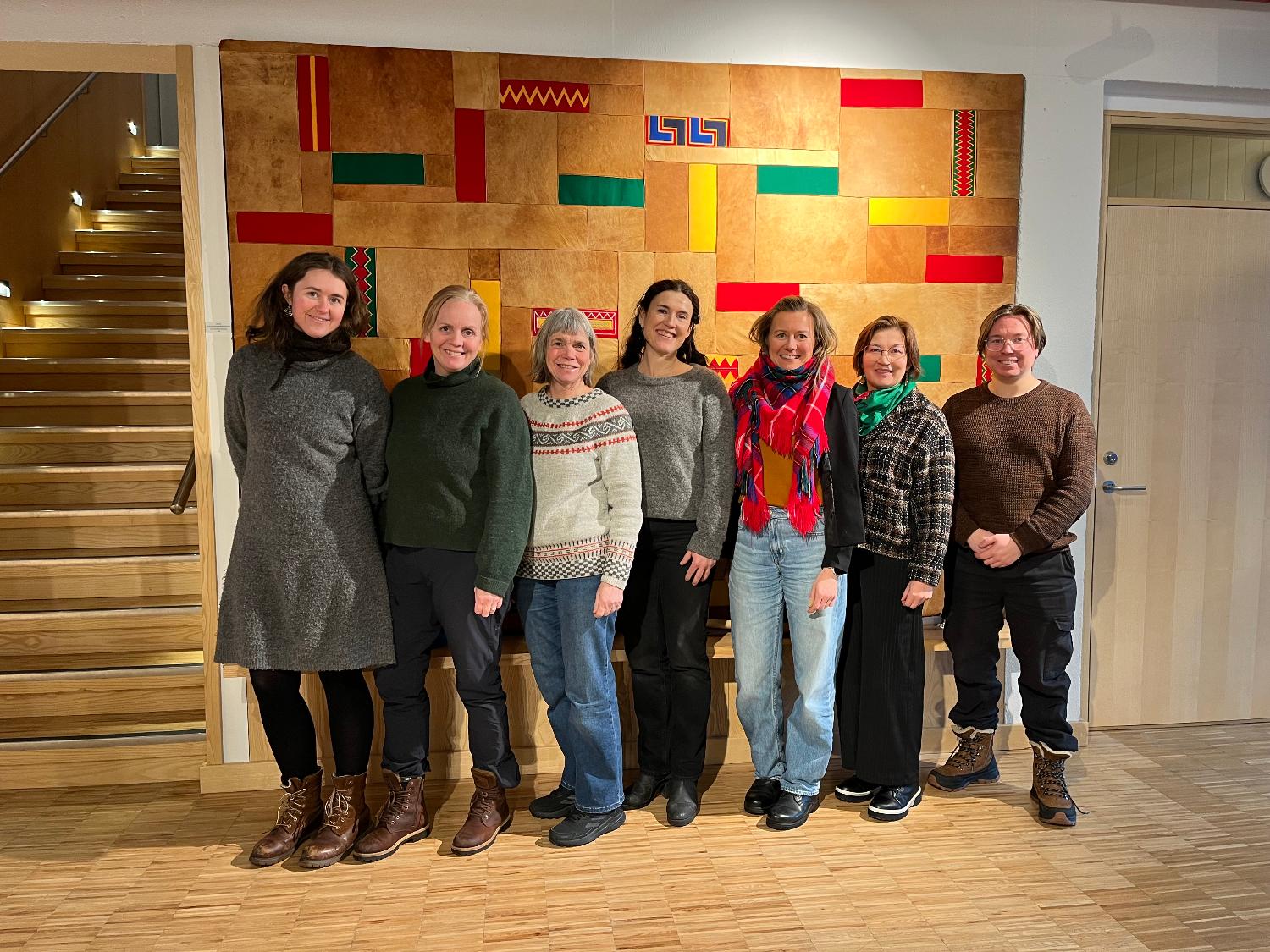 Photo: Bianca Röse-Martinussen. In the photo: Solveig Øye Bjørdal, Camilla Risvoll, Hege Ruud, Eli-Anita Øivand Schøning, Trude Fonneland, Camilla Brattland and Mathias Eilert Olsen.
Taking as a point of departure the disruption of local and Sámi food systems in a region characterized by Norwegianization processes, BIEBMOLASSI aims to contribute to the emerging reconciliation processes for Sámi in Norway. The project draws upon and operationalizes an Indigenous understanding of food systems, where food is a central part of culture and an arena for reconciliation that can serve to bridge the past with the present acknowledging traditional Sámi foods as a valued part of Sámi culture.
BIEBMOLASSI examines local Sámi food systems in Stuornjárga (the Skånland Peninsula) in Southern Troms and the Sallto (Salten) region in Nordland, and how their revitalization can support reconciliation.
BIEBMOLASSI is a research collaboration between The Arctic University Museum of Norway, Nordland Research Institute, Várdobáiki sámi guovddáš and Salten Mat. The University of Lapland in Finland is the project’s international partner.
BIEBMOLASSI is organized into four work packages. WP2 focuses on mapping local Sámi food systems, and WP3 on actions for reconciliation in Sámi food systems, while WP1 ties everything together and WP4 covers project management. Click the button to read more.
Our project webpage may be found HERE.
Sámi food systems have been historically integrated into larger industrial food production systems, leading to the marginalization of traditional practices. The Norwegian Truth and Reconciliation Commission has highlighted the impact of these disruptions on Sámi culture and livelihoods. Biebmolassi addresses these challenges by focusing on the role of Sámi food systems in cultural resilience and reconciliation. The project will explore historical and contemporary Sámi food systems, examining how they have changed and what innovations can be developed. It will map food systems and foodscapes, document traditional practices, and facilitate knowledge transfer between generations. The project emphasizes the importance of Indigenous food systems in sustainability and climate change adaptation. The area of focus in the project is Sallto and Stuornjárga.
Our project webpage may be found HERE.
End: desember 30. 2028
Unit: UiT The Arctic University of Norway Keywords: Kultursosiologi / Kulturelle studier av kunnskap og vitenskap / Historie
Funding:
Norges forskningsrådParticipants:
Eli-Anita Øivand SchøningTrude Fonneland
Camilla Brattland
Camilla Risvoll
Solveig Øye Bjørdal
Maiken Bjørkan