p38 MAPK
Dimerisation and HRD loop deformation as regulators of p38α MAP kinase autophosphorylation
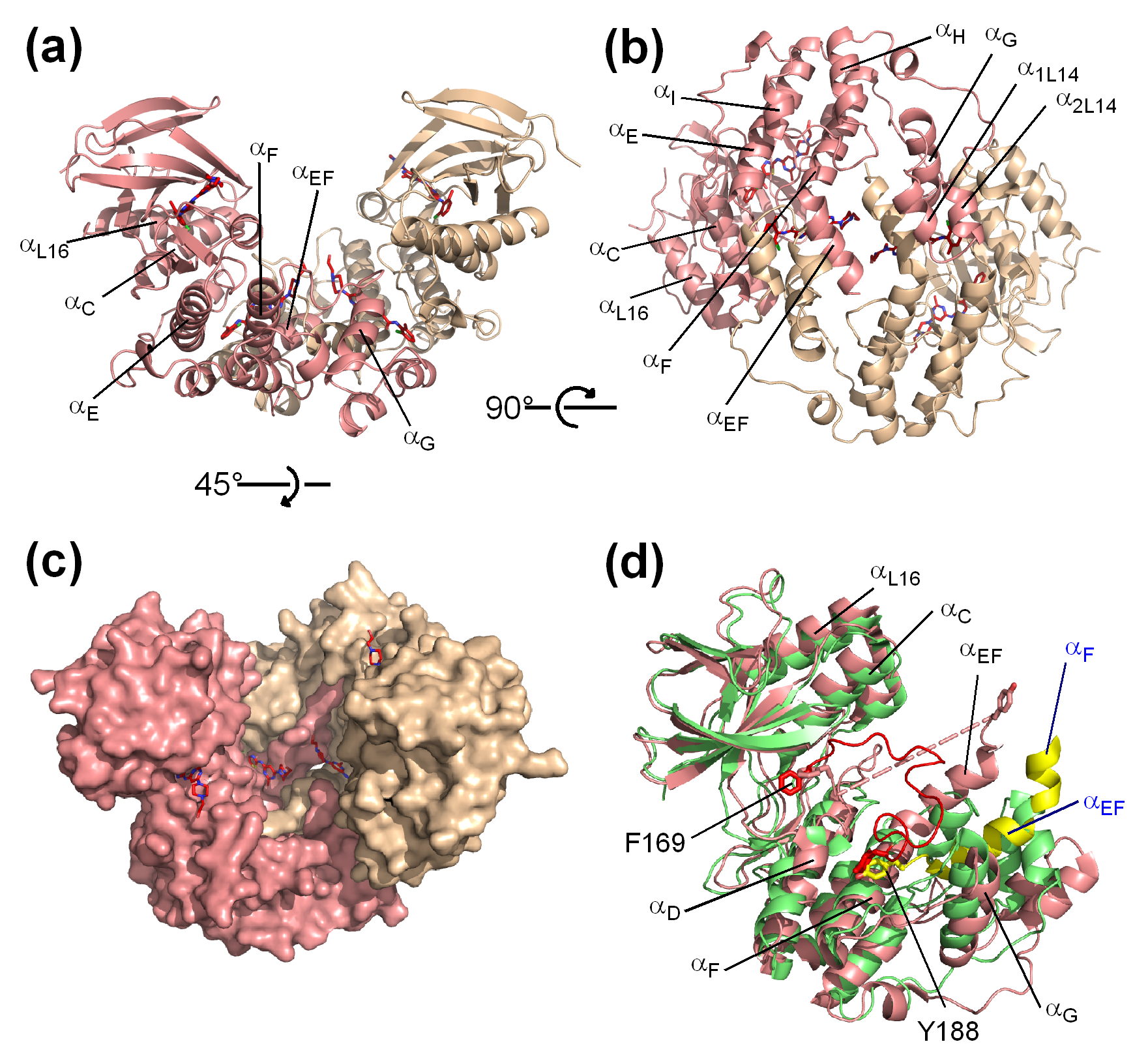
MAP kinase mediated cellular signalling pathways are activated by environmental stresses and by cytokine binding to cell surface receptors. This leads to activation of the MAP kinases by dual phosphorylation at the activation loop TxY motif by MAP kinase kinases (MKKs). However, non-canonical activation pathways are emerging that drive specific MAPK responses. MKK independent activation of p38α via autophosphorylation is likely the key mechanism for T-cell antigen receptor signalling, and is also implicated in myocardial ischemic damage. Studies have shown that mutations and phosphorylation, can enhance or initiate the non-canonical autophosphorylation pathway; however, structures and regulatory mechanisms of the dimeric state responsible for autophosphorylation were unknown. Here we report the crystal structure of a novel domain-swapped homodimeric form of p38α from Salmo salar. Portions of the activation segment are swapped and the tyrosine of the conserved sequence YxAPE is anchored in the partner, placing the activation loop in a volume suitable for presentation for phosphorylation. Furthermore, dimerisation contacts stabilize the HRD catalytic loop in an inactive geometry. Thus, the structure shows both a potentially auto-catalytic dimer structure and how autophosphorylation is enabled only after mutation or phosphorylation of key residues. The conservation of the swapped segments and of the HRD catalytic loop imply that analogous dimerisation and inactivation mechanisms may occur elsewhere in the kinome as well.