Roundtable on indigenous peoples and the sustainable development goals (SDG)
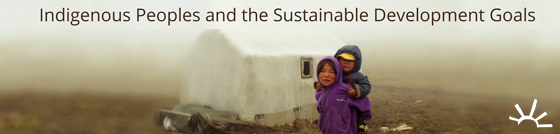
Two weeks after the adoption by the United Nations of the Sustainable Development Goals indigenous peoples gather in Copenhagen to take stock and strategize on their involvement in the 2030 agenda.
IWGIA and the Norwegian Forum for Development Cooperation with Indigenous Peoples have organised a Roundtable Conference to assess the newly adopted Sustainable Development Goals and their relevance for indigenous peoples.
The Roundtable will assess:
- The lessons learned from Indigenous Peoples Engagement in the Post 2015 process.
- The Outcome Document of the United Nations summit for the adoption of the post-2015 development agenda
- The way forward: how to ensure the respect and protection of indigenous peoples’ rights in the implementation of the 2030 Development Agenda
The Conference will be attended by indigenous peoples' representatives from the Arctic, Russia, Asia, Africa and Latin America and Indigenous Peoples' Major Group.
There will be participation from the UN Special Rapporteur on the Rights of Indigenous Peoples, the UN Expert Mechanism on the Rights of Indigenous Peoples, the UN Permanent Forum on Indigenous Issues Secretariat, International Fund for Agricultural Development, the Danish Ministry of Foreign Affairs, the European Union, the Danish Institute for Human Rights, academic institutions and NGOs.
The Conference is hosted by the Danish Ministry of Foreign Affairs.
Programme
Venue: Eigtveds Pakhus, Asiatisk Plads, Ministry of Foreign Affairs Copenhagen, Denmark
8th October
| 08:30 - | Registration of participants |
| 09:00 - 09:30 |
Welcome and introduction by the organizers:
|
| Module 1 |
Lessons learned from Indigenous Peoples Engagement in the Post 2015 process
Facilitator: Lola García-Alix
|
09:30 - 10:00 |
Myrna Cunningham: What were the synergies between the WCIP process and Post 2015 process? Galina Angarova: The role of the Indigenous Peoples Major group: What were the challenges and opportunities encountered by the Indigenous Major Group in the process? Tarcila Rivera Zea: How were indigenous women engaged in the Post 2015 process? |
| 10:00 -10:15 | Coffee |
| 10:15 - 10:45 |
Dali Angel: Which partnerships have you and your organization been involved in during the 2015 process? Joseph Ole Simel: How have indigenous peoples in East Africa been involved in the 2015 process and what have you achieved? Hjalmar Dahl: Have the Inuit People been engaged in any dialogues with their governments in relation to the Post 2015 Development Agenda? Can you share your experiences working with governments? |
| 10.45 - 11:45 | Roundtable discussion |
| 11.45 - 12:00 | Identification of key conclusions & key remarks regarding lessons learned from indigenous peoples’ engagement in the Post 2015 process. |
| 12:00 - 13:00 | Lunch break |
| Module 2 |
Assessment of the outcome document of the United Nations summit for the adoption of the Post-2015 development agenda: “Transforming our World: the 2030 Agenda for Sustainable Development”
Facilitator Jens Dahl.
| 13:00 - 13:3,0 |
Victoria Tauli Corpuz: Where do you, as Special Rapporteur, see the opportunities and challenges of the new framework to advance the recognition of indigenous peoples’ right to a self-determined development? Albert Barume: With an African perspective: How 2 do you analyze the value of the new document? Rodion Sulyanziga: Will the new Development framework (Goals targets and indicators) be a useful tool for indigenous peoples in Russia? Why and how could you use them? |
| 13:30 - 14:15 | Roundtable discussion |
| 14:15 - 14:30 | Coffee break |
| 14.30 - 15:00 |
Allan Lerberg Jørgensen: The Human Rights Perspectives on the implementation and monitoring of the SDGs? Tove Søvndahl Gant: Can the new Development Agenda provide an opportunity to indigenous peoples to increase visibility/relevance of their issues in future EU development policies and programs? Else Grete Broderstad: Which role will academia play in the development of indicators and in the monitoring process? |
| 15:00 - 15:45 | Roundtable discussion |
| 15:45 - 16:00 | Identification of key conclusions & key remarks. |
| 19:30 - | Dinner |
9th October
| Module 3 |
The way forward: how to ensure the respect and protection of indigenous peoples’ rights in the implementation of the 2030 Development Agenda Facilitator: Vicky Tauli Corpuz.
| 09:00 - 09:30 |
Chandra Roy-Henriksen: How can the PFII use the new framework? Which role will the PF Secretariat play in the process ahead, particularly in relation to the development of indicators and monitoring initiatives? Joji Cariño: Challenges and opportunities for indigenous peoples in the process ahead regarding the development of indicators? Leila Susanne Vars: How can the Sámi use the SDGs in the dialogue with the Nordic governments? |
| 09:30 - 10:15 | Roundtable discussion |
| 10:15 - 10:30 | Identification of key conclusions & key remarks. |
| 10:30 - 10:45 | Coffee break |
| 10:45 - 11:15 |
Sidsel Saugestad: Are indigenous peoples on their way out of development assistance? Antonella Cordone: The role of UN funds and agencies: What will IFAD do about the implementation of the SDGs? Will the new Development framework be a useful tool for designing, strengthening and evaluating policies and programs at IFAD and ensure that indigenous peoples rights are respected and protected? Elsebeth Tarp: Comments on indigenous peoples and development assistance. |
| 11:15-12:00 | Roundtable discussion |
| 12:00 - 12:15 | Identification of key conclusions & key remarks. |
| 12:15 - 13:15 | Lunch Break |
| 13:15 - 15:00 | Key conclusions of the discussions under the three modules Facilitator: Joji Cariño. |
| 15:00 - 15:30 | Coffee |
| 15:30 - 16:00 | closing |
| 19:00 | Farewell dinner |
For conference presentations and documents, visit International Work Group for Indigenous Affairs (IWGIA) homepage