Blog
| 2016 | 2015 | 2014 | 2013 | 2012 | 2011 |
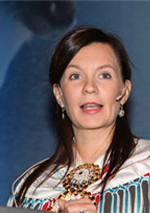 |
25.12.2014 ‘We need to be bold’ she says, ‘and ask ourselves if we are doing nothing but the best to protect biodiversity in the Arctic’. Standing tall, albeit small, Aile Javo from the Saami Council carries on; ‘Are we doing all we can, are we doing the right work with the Arctic Council?’ |
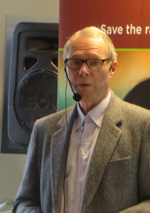 |
26.11.2014 When we talk about the dealings between business and human rights for indigenous people, the task of addressing issues and implementing ‘protection mechanism’ seems almost unsurmountable. However, ‘it depends on what perspective and the context of the place from where we are looking at the issues’ says Hans Petter Graver, the Chair of OECD National Contract Point Norway. |
 |
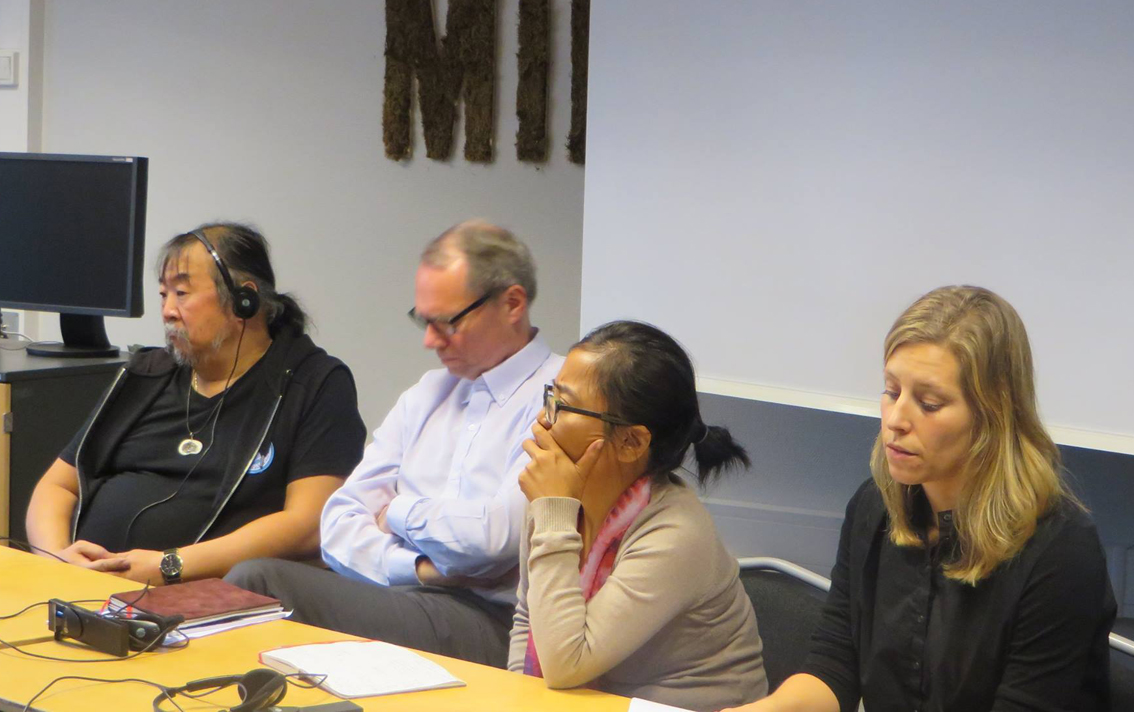
19.11.2014 “When an indigenous person loses his/her land, s/he is no longer an individual, no longer ‘somebody’. That is how important land is to indigenous people because land is identity”, remarked Rukka Sombolinggi of the Indigenous Peoples’ Alliance of the Archipelago (AMAN), Indoneisa. |
 |
18.11.2014 Current business development is filled with catchy words such as ‘sustainability’ and ‘corporate social responsibility’ (CSR). There is accumulating awareness about how businesses should have some form of ethical and social responsibility. Businesses have, at the least, the financial and political power to do so. However, the fundamental purpose of most businesses is a linear construction towards profit, so what are the obligations of businesses, especially when it comes to Indigenous Peoples? |
 |
11.11.2014 “There are already several treaties and agreements. Even though it represents an essential foundation, we need to move forward with solid implementation. We need tools to strengthen the importance of these documents.” Directly from the start, these words from Rukka Sombolinggi of the Indigenous Peoples Alliance of the Archipelago (AMAN) have set the tone of the seminar. |
 |
21.10.2014 Cultural difference is the starting point for a lot of activities related both to research and development cooperation. How to deal with cultural difference is a difficult question to answer. Whose terms are used? For the benefit of whom is research done? These were some of the topics treated on the NFU 2014 Conference in Tromsø. |
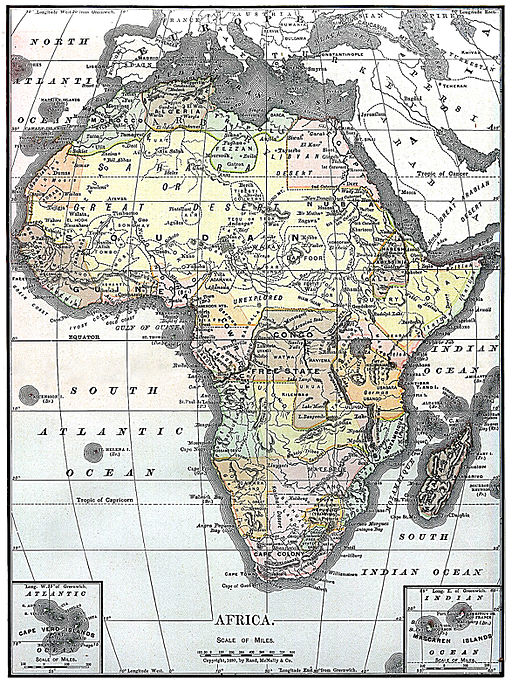 |
21.10.2014 The issue of development and conflict in Africa is a highly political one. It is related to the difficult questions of identity and access to resources. Still, there is not one, single African context. During this parallel Session, there were three presentations on issues relating to the Politics of Development and Conflicts in Africa. |
 |
21.10.2014 On October 2nd, Director Jesper Simonsen of the Norwegian Research Council presented the following table to the audience of “On Whose Terms?” the NFU’s conference of 2014. With the table he presented a question: What is the worst research? |
|
21.10.2014 The first keynote plenary session of the NFU Conference was «Working in Both the North and the South: Comparative Experiences» at which two speakers discussed this topic from their different perspectives. Professor Peter Geschiere (University of Amsterdam) and professor emerita Randi Rønning Balsvik (University of Tromsø) covered issues from Cameroon, Ethiopia and Norway |
|
21.10.2014 One of the sessions during the second day of the On Whose Terms? conference was devoted to the topic “Education and Social Justice”. Jennifer Hays and Velina Ninkova, both from the University of Tromsø, presented their works at the session. |
|
21.10.2014 One of the main goals of the On Whose Terms? conference was to provide a stage for discussions of challenges and solutions researchers are facing when attempting to create an effective collaborative research atmosphere with colleagues from different social and cultural backgrounds. One of the sessions was the keynote plenary about cross-cultural research collaboration, which specifically promised to discuss Negotiating Codes and Dissonant Expectations. |
 |
21.10.2014 On Thursday, October 2nd 2014 as part of the “On Whose Terms?” NFU Conference hosted at Uit The Arctic University of Norway, social anthropologist and filmmaker Professor Lisbet Holtedal delivered her keynote address on the subject of Power, Communication and Development: Epistemological Output of Cross-Cultural Collaboration. In her address, Holtedahl reflected upon the ways in which the academy has historically created societal hierarchies and asymmetries of power – between the academy and society at large, between the global North and the global South, between men and women, and between all over marginalized groups and their privileged counterparts. |
 |
03.06.2014 Knowledge is power, it is said. This is most definitely valid when it comes to indigenous peoples and education. How can development cooperation work to strengthen the education of indidenous peoples, and towards an indigenous friendly education? |
|
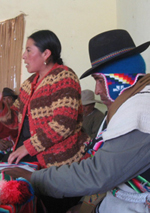
11.04.2014 We wish to express our gratitude to all of those who traveled great distances and took time out of busy schedules and away from their families and homes in order to join us this week in Tromsø to discuss the complex issues of Education, Learning and Indigenous Rights, with particular attention to what kinds of knowledge, skills and languages people need to create sustainable livelihoods. We chose the title of this conference with the goal of drawing out the links between “education” and the right of indigenous people to determine their own livelihood strategies and development pathways, and the fact that access to quality education is a “right” in and of itself. |
 |
11.04.2014 There are many examples of education being used as a tool to oppress indigenous peoples, by forcing students into national systems, and denying use of own language and adaptation to culture. Norway has a history that we are not proud of in this regard. Education can also be a tool for liberation. Education for Liberation is more than a slogan for SAIH. It is a philosophy and an important value for SAIH’s work, inspired by the work of Pablo Freire. |
|
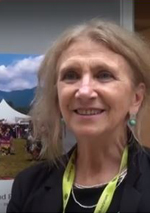
08.04.2014 Serena Heckler and Jannie Lasimbang talks about The 15th annual Forum Conference. The conference of 2014, entitled Education, Learning and Indigenous Peoples’ Rights: What knowledge, skills and languages for sustainable livelihoods? was held at UiT The Arctic University of Tromsø in April 2014. |
 |
03.04.2014 Interview with Irene Beller who is a political anthropologist and director of Laboratory for the Anthropology of Institutions and Social Organizations (LAIOS) at the National center for Scientific Research in France (CNRS, Paris). |
|
03.014.2014 Writing this, the Forum conference 2014 is in its center. It is the middle of the second day. We have had presentations from all over the world, from different kinds of perspectives, covering a wide range of topics. Still, there are some commonalities. Having education and indigenous peoples as main topic, makes all the participants talk about something that can be shared. |
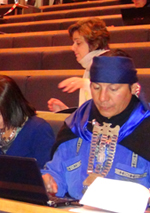 |
03.04.2014 Photos from the first day. |
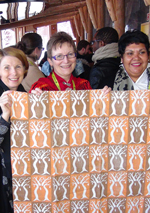 |
02.04.2014 The beautiful voices from the children of Prestvannet School opened the the 15th annual Forum conference, which extends for the next three days with presentations and discussions about education, learning And Indigenous peoples` rights. |
|
02.04.2014 Education for all? I asked this question at this blog a few days ago. As I am writing this, the Forum Conference 2014 has just started. The main topic is indigenous peoples and education. Throughout the first sessions of the conference, the international and global dimension of this topic has been treated. What should be the goals of the international efforts? |
 |
31.03.2014 Alle skal få gå på skole. Det er lett å være enig i dette. Samtidig er det slik at mange steder er skolen først og fremst basert på eller tilpassa majoriteten i et samfunn. Hvordan er det med skole og utdanning for urfolk og minoriteter? |
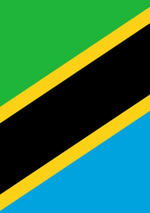 |
24.03.2014 Legal reforms in Tanzania have seen the eviction of thousands of Maasai pastoralists, and violent land-related conflicts between pastoralists and other citizens have been making Tanzanian headlines almost daily. Over 10,000 pastoralists have been evicted so far by the government, who argues that pastoralism is “not [a] productive” mode of living. |
 |
23.01.2014 During the month of October, two important statements were made about Aboriginal issues in Canada. James Anaya, UN Special Rapporteur on the Rights of Indigenous Peoples was on a visit to Canada in order to develop a report to evaluate the situation of indigenous peoples in the country and to make a series of recommendations. |