Are businesses accountable for Indigenous Rights?
Let’s open this can of worms. It is no secret that CSR can be seen as an extension of the marketing department of any corporation. It makes the corporation look good, and does not alter the operation costs too much. It is also no secret that Indigenous Rights movements are on the rise in the last few decades and have entered the political arena more than ever. Now, is it possible for two sphere, intrinsically opposing and conflicting, to come to a middle ground? And, is the middle ground enough? These are burning questions very few can answer. Perhaps because it is so complex, no just one answer will suffice.
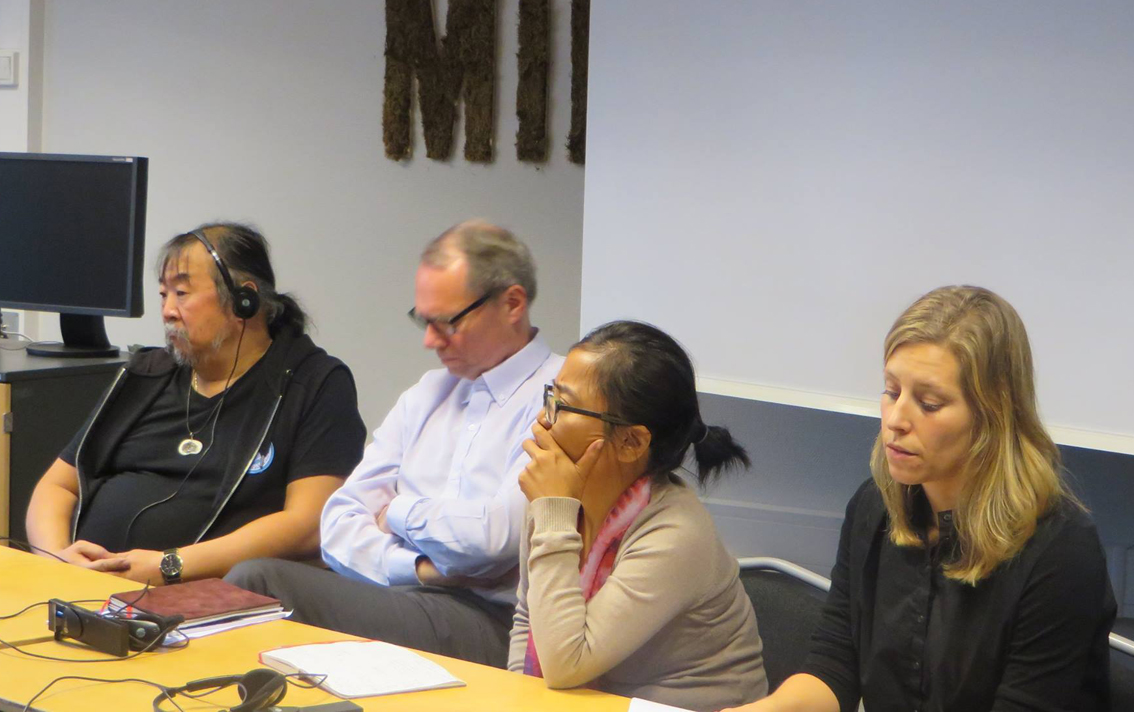
Companies have obligations to the state where they are domiciled, said Pavel Sulyandziga. In contrast, Jan Kristensen, Director of Business Sustainability at Telenor, said these guidelines are hard to translate when operating in foreign countries. Indigenous Peoples are the primary group affected by business operations, being on the front line of cultural and social vulnerability and land use conflicts.
There seems to be this lingering myth that Indigenous Rights is the responsibility of the State, not corporations. Sulyandziga says that too often the corporate speech is “we pay our taxes and give work to local people” and feel CSR is fulfilled. Reality is, in the best-case scenario, where Indigenous Peoples have rights granted by the state, corporations can often still override these obligations. In most instances, businesses operate in countries where Indigenous Rights are not even acknowledged by the state. Yet, most stakeholders prefer escaping the rough road of establishing sanctions. Sanctions are extremely hard to institutionalize, let alone implementing them.
More space for more voices
However, the good news is that it is a discussion increasingly present in the current development field. Seminars like the one in Oslo keeps this discussion alive. With complex issues, diversity seems to be the key. Thus strengthening the accountability of corporations towards Indigenous Peoples is a task performed from multiple sides and actors.
And all actors are needed; be the Indigenous local leaders, the UN Working Group members, the business representatives, the CEOs and politicians. Moreover, communication is the second key to strong implementation. All actors need to find a space where exchange of knowledge is possible.
Although this issue is pressing, especially in places where the very survival of Indigenous Peoples is based on land exploited by corporations, Sulyandziga cautioned to take a methodical approach. He stressed the importance of building upon existing documents and advancing step-by-step in order to solidify a strong body of legally binding documents and tools. Rukka Sombolinggi from AMAN, agreed also on this last point; it is the solidification of the documents that will secure and protect Indigenous Rights. If few believe in immediate sanctions, more believe in incentives and legally binding documents.
Many steps at a time
In the latest Arctic Circle meeting in Reykjavik, out of 48 sessions, only five concerned the lives and well-being of people residing in the Arctic. Furthermore, amongst all plenary sessions, only one, on the last day, talked about Indigenous Peoples. Prestigious meetings like the Arctic Circle, display the pulse of business development in the North. The absence or small representation of Indigenous concerns show how lightly most businesses get these issues.
This re-enforce the need for more dialogue and work towards understanding, establishing, institutionalizing and implementing rights to protect Indigenous Peoples in business agendas. Seminars like the one in Oslo, are supporting this two-way process; bottom up & top to bottom.
Selena Raven Cordeau,
Author for FDCIP and student in the Master’s in Indigenous Studies at UiT The Arctic University of Norway.