Education for Liberation: SAIH’s support to Indigenous Peoples’ Education in Latin America
Education for Liberation is more than a slogan for SAIH. It is a philosophy and an important value for SAIH’s work, inspired by the work of Pablo Freire. The most important guiding document for SAIH’s development cooperation is the Solidarity Strategy, and it states “Quality education based on the local context and the local needs will inform, raise awareness, develop and liberate individuals, groups and societies, and provide tools to critical and individual thinking.” (SAIH’s Solidarity Strategy 2012-2017)
SAIH and Indigenous peoples
SAIH has since the early 1980ies worked with the rights of indigenous peoples and Afro- decedents in Latin America. At present, our work is concentrated in three countries:
- Nicaragua, focusing on intercultural education for indigenous people and afro-descendants.
- Bolivia, focusing on education and training for the rights of indigenous youth.
- Colombia, focusing on the rights of indigenous and afro-descendant youth.
Common for all is a focus on youth and especially young women, and the context is that indigenous people in many aspects on paper have clearly defined rights, but that these rights often violated. SAIH is supporting the process of achieving the rights, in collaboration with organizations in the three countries. Youth need to obtain the relevant knowledge and skills to be active participants in their societies. For example, you need to know what your rights are to be able to demand to the authorities that the rights are fulfilled.
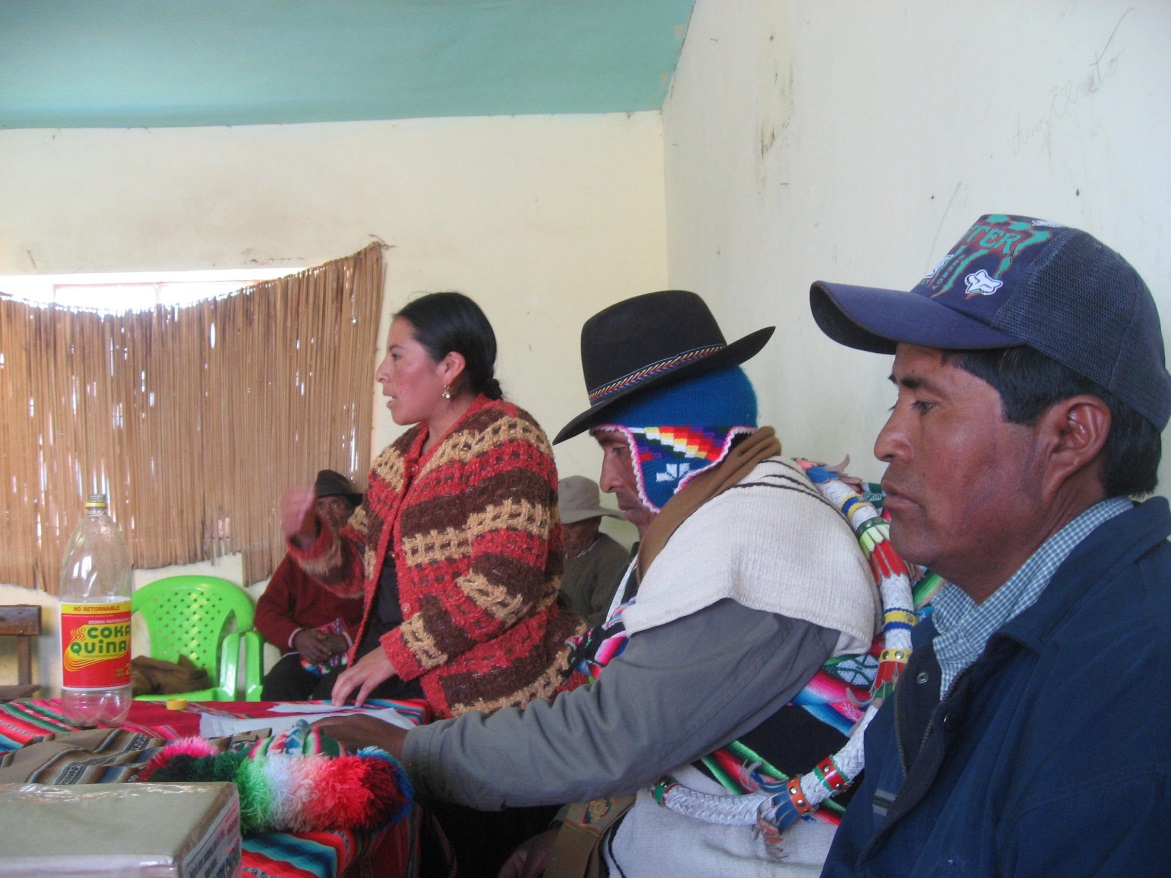 |
| Representatives from the Educational Council of the Urus meet with the people of Irohito. |
SAIH’s work with partner organizations
In Bolivia, SAIH works with seven partner organizations, among them FUNPROEIB Andes. This organization works to strengthen the various indigenous nations’ development of their own, regionalized curriculums, as they are entitled to in Bolivia’s new Constitution from 2009 and Education Law from 2010. FUNPROEIB Andes shares SAIH’s view on the role of education. They say “We consider education to be the way for indigenous people, afro-descendants and other vulnerable groups to contribute to changing the reality. Not to incorporate themselves into the existing economic system, but to change it in accordance with their own cultures.” (from SAIH study on Education for Liberation, Capacity Building and Development of Methodology, SAIH study, ongoing).
At present, FUNPROEIB Andes supports the development of regionalized curriculums through research and organizational strengthening with the Uru people and the Afrobolivian people.
Another organization that SAIH works with in Bolivia is CDIMA, an organisation with and for Aymara women. Their focus is on achieving the rights of the indigenous youth and women, and to encourage to take on formal positions in power spheres, such as politics.
“The goal of education is to promote indigenous youth and women’s leadership, supporting them in strengthening their traditional knowledge, developing their values and taking into account knowledge from other cultures, so that they convert themselves into change agents or actors in the processes of social, economic, political and cultural change in our country.” (from SAIH study on Education for Liberation, Capacity building and Development of Methodology, SAIH study, ongoing).
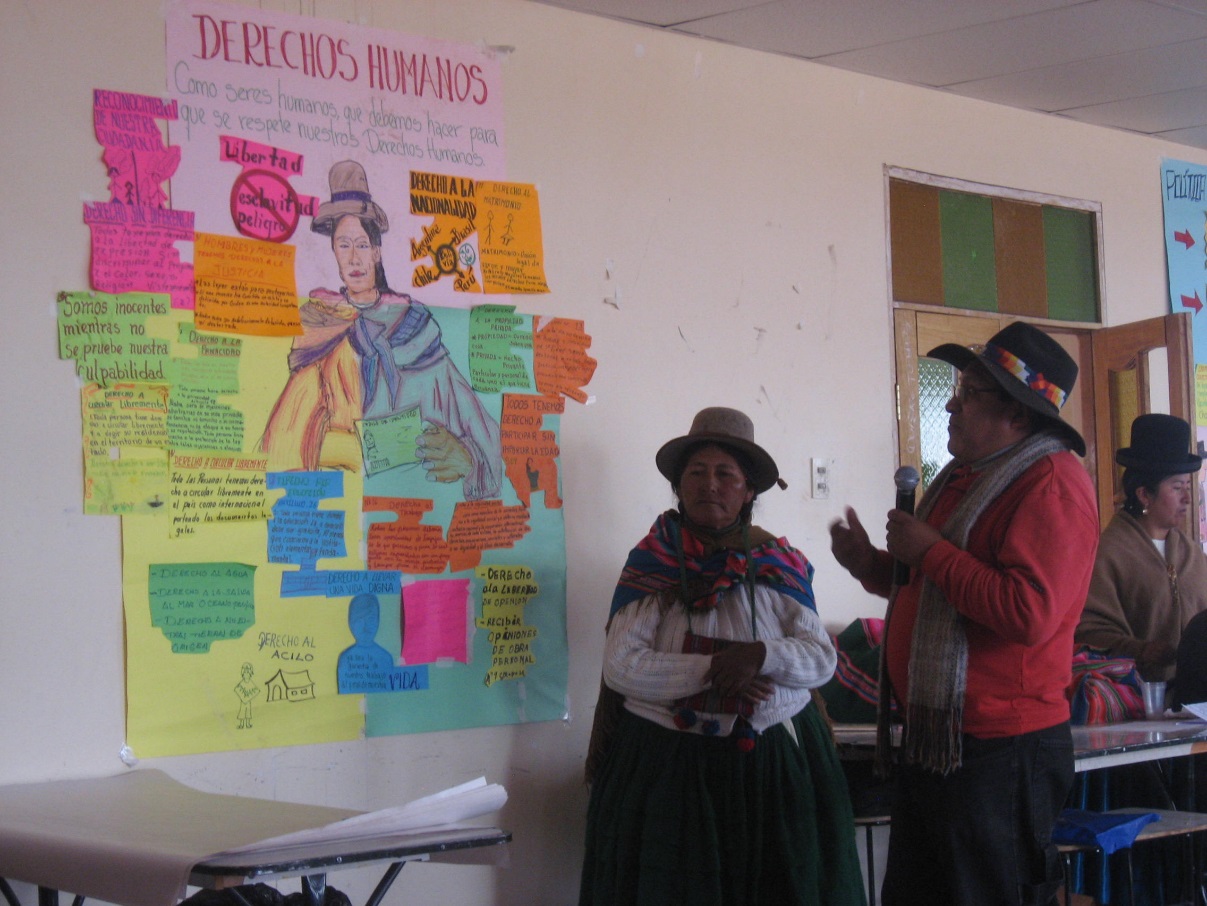 |
| Students at CDIMA’s leadership training, explaining the rights of indigenous peoples using the Human Rights as the starting point. |
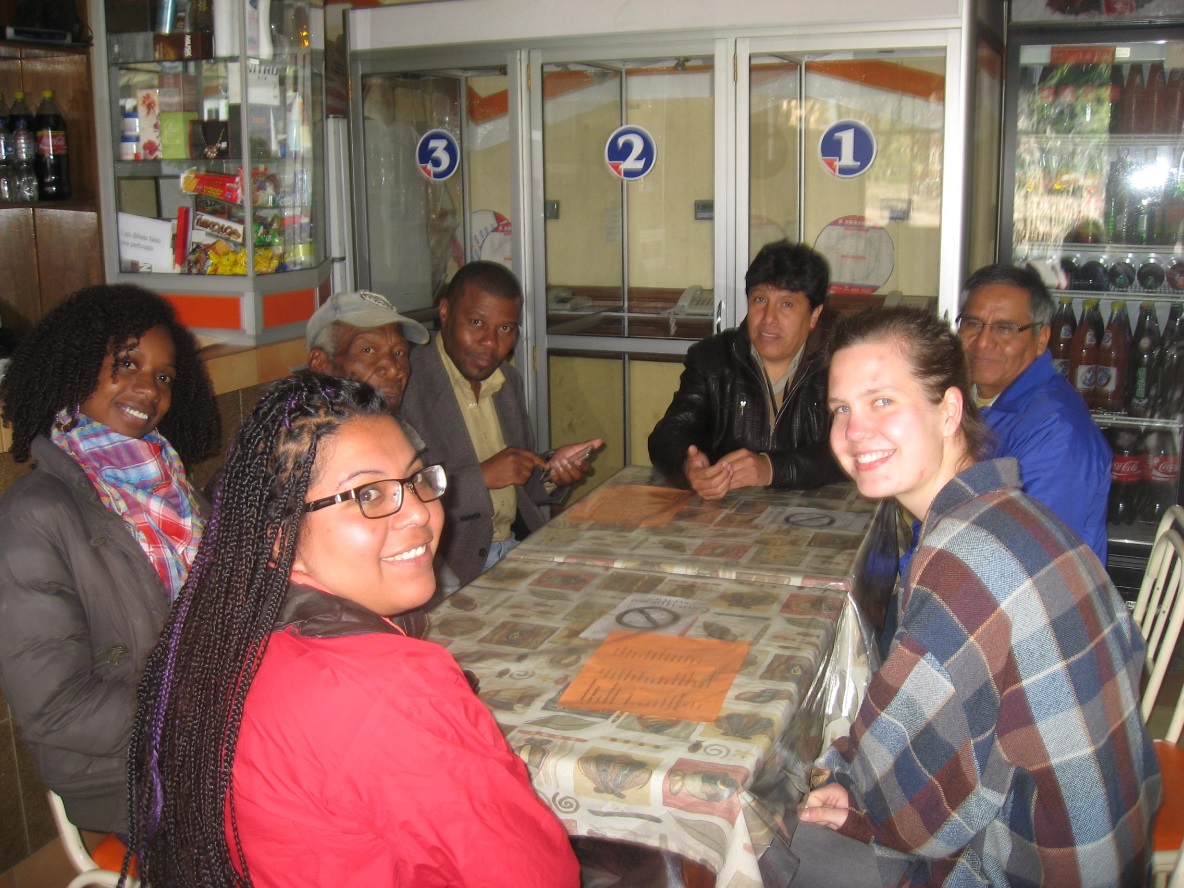 |
| The Educational Council of the Afrobolivian people share office and force with CONAFRO, a organisation that works for the rights of the afrobolivians. SAIH, FUNPROEIB Andes and CONAFRO/Educational Council of the Afrobolivians meet in Bolivia. |
Being a partner
SAIH wants to be more than a donor. We want to be a partner in the development processes taking place in the countries we work. We share important ground values with our partner organisations, we have deep respect for the people we work with, we experience that we have a lot to learn, and we bring the stories from Latin America to the Norwegian students and academics.
By Live Bjørge,
Norwegian Students’ and Academics’ International Assistance Fund
This text is based on a presentation given at the SOGIP/Forum for Development Cooperation with Indigenous People in Tromsø 2-4 April 2014.